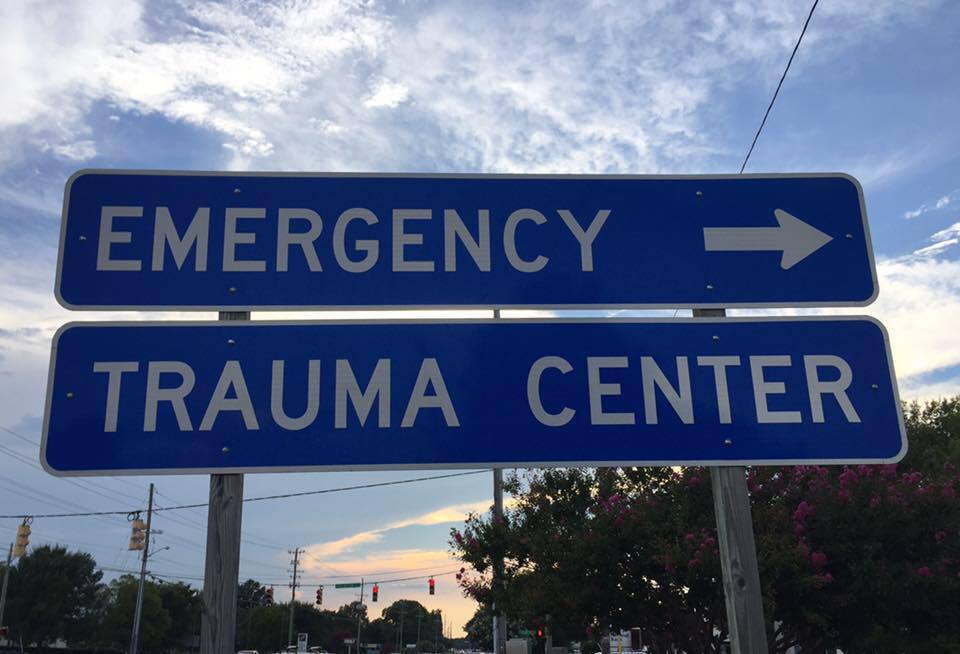
An ED and Trauma Chaplain Blessing

Blessed are you, the ones who enter into the unknown every day, as you cross the thresholds of the department of emergency. May you be the sacred voice needed for all that you will encounter.

Blessed are you, the ones who witness the unimaginable, where one split second can change a life forever, including yours. May you find your spirit of peace in the midst of sudden change.

Blessed are you, the ones who beg the parents not to see their deceased son who was a passenger, because the injuries made him unrecognizable. May your strength carry you, knowing that you need to comfort families of the other teens involved, too.

Blessed are you, the ones who support those who tried with everything they had to save that little girl’s life, only to be assaulted by that intoxicated voice in the next room. May you hold them with the promise that they are not alone.

Blessed are you, the ones who holds the mother as she walks into the bay, where her son, shot to death, laid breathless.  May your strength hold her up long enough to say goodbye.

Blessed are you, the ones who caress the foreheads of those gone by their own hands, when they couldn’t take the darkness anymore. May your understanding resilience see the light of hope that is tomorrow.

Blessed are you, the ones who maneuvered through the chaos of care, as you held the hands of those who had no support at all. May your compassionate presence carry you through. 

Blessed are you, the ones who absorb the blood curdling screams from devastated families when they hear what nobody wants to hear. May the words of your mindful spirit, erase the sounds that linger.

Blessed are you, the ones watching the staff who have continued CPR well beyond death because family is frozen in shock and can’t say “stop”.  May you find comfort in one another, as the pain and exhaustion take hold of all of you.

Blessed are you, the ones who face day in and day out, not only the emergencies that come to the bay but also the traumas that continue on. May you seek those moments of renewal, when the quiet moments rarely come along.

Blessed are you, the ones who come face to face with those who are traumatized as well as those who caused their pain. May your faith be assured that your conflicted care for all who enter this space won’t go unnoticed.

Blessed are you, the ones who protect one another through strange humor, compartmentalizing, denial, built up walls, and unvoiced pain. May you see the tiniest crack in each other, with a light that shines through, that you will survive.

Blessed are you, the ones who are called to do this work. May you be blessed in the ways you are a blessing to many.


(c) Linda C. Moore, 2022

Let the Silence Speak

When I started in chaplaincy a long time ago, silence was awkward for me. Ironically, I am an extreme introvert and adore silence, when it’s outside of the hospital and in my control.  When I am sitting with a patient’s family, who just received bad news, or anticipating bad news, silence can be deafening.

Last week, one of my patients coded and despite heroic efforts, the patient died. The spouse was present and it would be a while before other family arrived. The spouse and I sat in the family conference room while we waited.

I used to want to fix things for the families. I wanted to say something that made a difference for them; that would help them feel better. That’s why the silence was awkward for me. I thought I needed to say something to bring comfort to the family, or to ease the family’s anxiety and distress. If their distress was elevated, I knew what needed to be done to help settle them down. If they were simply in a quiet place, appropriately emotional and concerned, I thought I needed to make the silence go away and do what I could to make things right.

With experience and maturity, I learned that nothing I could say, will fix it. No matter what I said, I could not make them feel better or worry less. In fact, there were times I said “something” and made the situation even worse. Thankfully, I grew in my experience and learned that silence can be a comforting place to sit with someone in their pain and grief.

That’s what happened last week. The spouse said she was “fine’, however it was clear, she was not. She just witnessed the code event of her husband and he didn’t survive. I acknowledged and affirmed her strength and said I would “stick around, just in case”.  I can tell when someone DOES wants me to leave and I will respect their wishes but she wasn’t sure what she needed. I did step away a few times, to give her some privacy. That’s important for a family member, especially knowing that the next days ahead, she is not going to have much privacy. When I returned, she didn’t need anything, so I simply stayed in the room. We sat in the comfort of silence and it was quite peaceful.

Clinicians say to me all they time, “Linda, I don’t know what to say or what to do”. I tell them to keep doing what they are trained to do and remember that they don’t have to say anything different, or anything at all. Silence is not a bad thing, especially in someone’s grief. They already know we can’t fix things and we won’t be able to make them feel better. What we can do is remind someone that they are not alone. We simply have to be present, sitting in the silence, together.

When the wife left, she hugged me and expressed her gratitude for the care i provided, saying that it helped.  I didn’t do much.  I simply sat in the same room with her and let the silence speak for herself.

When You Know What the Outcome is Going to Be

Have you ever been asked to pray for a family, to pray for a miracle because they are certain that everything is going to be ok? Have you ever prayed at the request of family, although you already know the outcome will not be what they want you to pray for?

It’s been a while since i’ve posted a chaplain blog entry. I have definitely been writing. Between my work computer and my personal laptop, there are about 6-8 unfinished entries. I’ve got a lot to say, just not really sure how to say it.

That brings me back to the original questions. Have you ever prayed for a family, as they ask you to pray for a miracle? They are certain that God will do the right thing and save their loved one.  Once they’ve been admitted to the hospital, that prayer request comes a little easier to fulfill, carefully worded in comfort. When the family is the family of a trauma patient, who lies in the trauma bay, being resuscitated by the ED and Trauma Teams, it’s a little more difficult to pray what they are calling out for. It’s even more difficult, when you already know that the outcome will not be what they are praying for.

The other day, at work, I was tired. When I am tired, i tend to get punchy. Most of the time, it’s a silly kind of punchy; filled with laughter, goofy comments, and jokes. That’s how the morning started. I was feeling great, hanging out with one of my teams and having a good day of support and camaraderie. We had no idea that was about to change.

When you work in a level 1 trauma center, your day can change in a matter of seconds, when there are traumas headed in your direction. Our traumas can be any age, gender and mechanism. Gun shot wounds, car collisions, assaults, stabbings, suicides, water accidents, falls, head injuries, animal attacks and depending on where you are located, even shark attacks. The list is endless. We’ve had infants to the elderly and we’ve had multiple traumas at the same time. Each trauma will impact a team member differently. We’ve worked hard to not allow the impact to maneuver it’s way into our emotions, but every once in a while, one does get to you.

When traumas come in, the ED and Trauma teams are prepared for whatever is coming. Sometimes, the teams have no idea what they are about to face but they are prepared.  They get the Trauma Bay stacked with appropriate supplies and medication. The operating rooms are ready to take on whatever trauma enters their facilities. Experienced doctors, surgeons, nurses, respiratory therapists, care partners, and other healthcare clinicians (including us chaplains) are present with the expertise to do all that can possibly be done. 

The unique thing about traumas is the split second it takes for one to happen and that one second changes someone’s life forever. There is no discrimination of age, skin color, gender, wealth, or gene pool. The life of this particular trauma that we were about to receive, was changed in a split second, too. There were already fatalities at the scene and this one would become another one. Despite the heroic efforts that were attempted by all the teams this day, the life of this trauma patient ended all too soon.  

I was with the families. They asked me to pray for their loved ones. They wanted me to pray that God will save them and to pray with the assurance that God already has. What they didn’t know, I already knew. The prayer they were requesting would not be answered in the way they had hoped. 

In my role as a chaplain, there are two scenarios that are difficult to accept. One is, no matter how hard the clinical teams work to save a patient, their resuscitation efforts may not be enough to bring the patient back. The second scenario is this, no matter how hard I pray, the outcome may not be what the family had hoped for. Either scenario is painful to accept, and even more difficult to accept when you already know how it’s going to end. 

I pray that never happens to you.