
You have no idea but are you willing to learn?
After being in this work for 10+ years, I am baffled by other clinical team members who don’t understand what a clinically trained chaplain does. When I first started, a nurse practitioner asked me, “what do you do besides pray? and “aren’t you going save him? get him to accept Christ?’ Yet, 10 years later, I still get the same questions.
I’m ok with the questions. I don’t mind folks asking because it gives me the 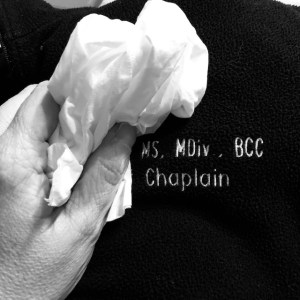 opportunity to educate those who are curious. I like the surprise reactions that come once they learn that to be a board certified chaplain (BCC), I needed to have 10+ years of post undergrad education, graduate studies in psychotherapy and behavior systems, a year long residency, 2000 plus hours of clinical practice, an insane amount of paperwork and reflection, plus an interview with board certified chaplains. AND, in order to KEEP that certification, I must obtain 50 continuing education units, EVERY YEAR!. YES, EVERY YEAR. Do you know, that is the SAME amount as an RN? an MD? I wonder if they have to pay for their CEUs out of their own pockets.
But all of that to say, they were willing to learn why a clinical chaplain is important in the work of the hospital and patient care. Unfortunately, there are many others who aren’t willing to learn and i wondered what they would think if they had shadowed me yesterday, or pretty much any day over the last year.
There are many times I am with patients and families, where prayer and Jesus Christ are never mentioned. I can’t count the number of times that I’ve sat with families and held a space to allow them to share whatever is no their hearts and minds. No other clinicians are around or incredibly busy trying to take care of the patients.
- You have no idea that the sacred space provided, allowed for people to express their anger and pain to God or whatever higher being they believe in.
- You have no idea that within this trusted space, families members are allowed to voice their spiritual and emotional distress.
- You have no idea that within the confines of this space, parents break down in my arms, as they come to the realization that the miracle of their child waking up will not happen.
- You have no idea that within the confidential conversations, the amount of grief, anger, guilt and burdens that family members try to release into this sacred space of forgiveness and understanding.
- You have no idea that within these sacred walls, the unlimited number of times that I try to take away the pain that family members are holding within their hearts, yet they are not able to let go.
- You have no idea that within this space, how I have tried desperately, to help loved ones to seek the hope of self-forgiveness, only to know that it may take a lifetime for them to accept that hope.
- You have no idea that within these walls, the number of times that patients or families have poured out their guilt, their pain, and have confessed all they’ve needed to, and I carried those confessions in their healing so they can let it go.
- You have no idea the number of times I have left this sacred space, with tears in my eyes because I can’t make the pain go away.
- You have no idea the number of hours i stayed up last night because I couldn’t get yesterday’s experience in this sacred space, out of my mind and heart.
- And you have no idea the number of times that I am humbled and honored to be in all of these scenarios, walking with patients and families, as we walk these halls and sit in this sacred space together.
No matter what I encounter in the sacred spaces of clinical chaplaincy, i know I make a difference, just like every other clinician who works at bedside. I am humbled and honored to be a part of these teams, doing what we can to help patients and families heal.
You may not have any idea now of what I do but are you willing to listen and understand the importance of this work, even if you can’t see the results on the discharge papers? Or number of lives saved?
Even when no prayer is spoken and no word of Christ is mentioned, I can promise you that prayer took place and the love of Christ was in every sacred space made.
 Last week, one of my patients coded and despite heroic efforts, the patient died. The spouse was present and it would be a while before other family arrived. The spouse and I sat in the family conference room while we waited.
 This Chaplain's Journey