Things seem really dark this year. I realized that this week as I have been thinking about “Good’” Friday” and “Holy Saturday”. Don’t even get me started on my frustration with it being called “Good” Friday. In Christian tradition, the Friday and Saturday between Maundy Thursday and Easter Sunday are days of darkness and grief as we mourn the death of Jesus. I admirably respect the traditions that acknowledge the death as much as the resurrection. In order for there to be a resurrection, there had to be a death. When I took Old Testament during seminary, I had to write a paper on what Holy Saturday would be like for the followers of Jesus, in the Gospels. It was one of my best works. Sadly, I can’t find it. But I wrote about the darkness of the death and how the people navigated between the darkness and the hope. I imagined there was an internal struggle, wondering if Jesus would actually come back. The people walked around in mourning,reviewing the images of the crucifixion that were forever etched in their hearts. While reviewing the images, Jesus’s voice could be overheard, with his promise, a promise he made himself; that hey would return. And just like any other individual in mourning, they wondered if he actually would.
It is Friday, April 7, 2023 and I feel like we are in that darkness. I know I feel that way. I feel like as a country, as a world really; we’ve been going through the darkness for quite some time. As I walk through the hallways of my work, I have seen a lot of darkness. As I think about what I’ve seen in the hospital, there is a lot of darkness and the overcast of clouds are only making it worse.
It’s not Covid this time. It is gun violence. It’s always been gun violence. There has been a steady increase. There has been a rapid increase in violence and what’s worse, the victims and the shooters are getting younger. They are teenagers, some barely out of their tweens. Their bodies look like red stained Swiss cheese and their faces look like children who had no way of knowing how to maneuver through their lives. Their bandages can’t stop the blood seeping from their heads. Their heads are suffering not only from penetrating gun shot wounds but also from a lack of minds that are mature enough to face what they have to face every day.The families are at bedside, crying in the darkness of their grief that they are too scared to acknowledge.
When i leave work for the day, i try hard to keep my promise of not watching the local news. I see the news every day in the hospital, so i don’t need to see it on tv or internet.Sadly, the news from around the country manages to enter my doors that i’ve tried hard to lock. The children i stood next to today were not the only children shot. Gun violence is the number one killer of children in the United States. When I leave work, i know i am not the only trauma chaplain holding the hands of grief stricken families. There are parents in other parts of the state and in other parts of the country, sitting at the bedside of their children. They are thinking about the last thing they did together, the last words they exchanged, the last time they heard their child laugh and wondering if they can afford the child size coffin they are too afraid to consider.
It’s incredibly dark right now and I am walking around in a bit of a haze. There are images playing in my head about the events i’ve seen on the news from Tennessee, Sandy Hook, and Columbine, just to name a few. The images of children i’ve seen in the hospital are running through my mind, too. I wonder what i will see tomorrow.I am not exactly sure but i am not feeling very hopeful that the promise of a resurrection will come true.
Blessed are you, the ones who enter into the unknown every day, as you cross the thresholds of the department of emergency. May you be the sacred voice needed for all that you will encounter.
Blessed are you, the ones who witness the unimaginable, where one split second can change a life forever, including yours. May you find your spirit of peace in the midst of sudden change.
Blessed are you, the ones who beg the parents not to see their deceased son who was a passenger, because the injuries made him unrecognizable. May your strength carry you, knowing that you need to comfort families of the other teens involved, too.
Blessed are you, the ones who support those who tried with everything they had to save that little girl’s life, only to be assaulted by that intoxicated voice in the next room. May you hold them with the promise that they are not alone.
Blessed are you, the ones who holds the mother as she walks into the bay, where her son, shot to death, laid breathless. May your strength hold her up long enough to say goodbye.
Blessed are you, the ones who caress the foreheads of those gone by their own hands, when they couldn’t take the darkness anymore. May your understanding resilience see the light of hope that is tomorrow.
Blessed are you, the ones who maneuvered through the chaos of care, as you held the hands of those who had no support at all. May your compassionate presence carry you through.
Blessed are you, the ones who absorb the blood curdling screams from devastated families when they hear what nobody wants to hear. May the words of your mindful spirit, erase the sounds that linger.
Blessed are you, the ones watching the staff who have continued CPR well beyond death because family is frozen in shock and can’t say “stop”. May you find comfort in one another, as the pain and exhaustion take hold of all of you.
Blessed are you, the ones who face day in and day out, not only the emergencies that come to the bay but also the traumas that continue on. May you seek those moments of renewal, when the quiet moments rarely come along.
Blessed are you, the ones who come face to face with those who are traumatized as well as those who caused their pain. May your faith be assured that your conflicted care for all who enter this space won’t go unnoticed.
Blessed are you, the ones who protect one another through strange humor, compartmentalizing, denial, built up walls, and unvoiced pain. May you see the tiniest crack in each other, with a light that shines through, that you will survive.
Blessed are you, the ones who are called to do this work. May you be blessed in the ways you are a blessing to many.
Despite it being Eastertide, I am feeling a little deflated. Tired. Empty. I thought, since I am not a minister in a church anymore, post Holy Week would not be as exhausting. I mean, I’m not leading various worship services, from Palm Sunday to Maundy Thursday or “Good” Friday to an early Sunrise Service Sunday morning. (Seriously, did Jesus really rise that early in the morning?)
Side note: there will be no judgement from the peanut (easter egg) gallery about missing an Easter Service. Until you talk to all the other people who you only see on Easter, don’t judge me.
Well, I was wrong. i am completed drained. I didn’t even make it to an Easter Service this year as I am stuck in-between Maundy Thursday and Easter Sunday. Empty. Not like the tomb but like a well that is bone dry.
I wrote this a few years ago. Seems appropriate now, as i stand in the shadows, hoping for my own resurrection.
Empty
Fill me with Your spirit Fill me with Your love Fill me with Your hope Fill me with Your space Fill me with Your grace Fill me with Your life
I feel so empty
Fill me with Your compassion Fill me with Your peace Fill me with Your touch Fill me with Your care Fill me with Your kindness Fill me with Your life
After being in this work for 10+ years, I am baffled by other clinical team members who don’t understand what a clinically trained chaplain does. When I first started, a nurse practitioner asked me, “what do you do besides pray? and “aren’t you going save him? get him to accept Christ?’ Yet, 10 years later, I still get the same questions.
I’m ok with the questions. I don’t mind folks asking because it gives me the opportunity to educate those who are curious. I like the surprise reactions that come once they learn that to be a board certified chaplain (BCC), I needed to have 10+ years of post undergrad education, graduate studies in psychotherapy and behavior systems, a year long residency, 2000 plus hours of clinical practice, an insane amount of paperwork and reflection, plus an interview with board certified chaplains. AND, in order to KEEP that certification, I must obtain 50 continuing education units, EVERY YEAR!. YES, EVERY YEAR. Do you know, that is the SAME amount as an RN? an MD? I wonder if they have to pay for their CEUs out of their own pockets.
But all of that to say, they were willing to learn why a clinical chaplain is important in the work of the hospital and patient care. Unfortunately, there are many others who aren’t willing to learn and i wondered what they would think if they had shadowed me yesterday, or pretty much any day over the last year.
There are many times I am with patients and families, where prayer and Jesus Christ are never mentioned.I can’t count the number of times that I’ve sat with families and held a space to allow them to share whatever is no their hearts and minds. No other clinicians are around or incredibly busy trying to take care of the patients.
You have no idea that the sacred space provided, allowed for people to express their anger and pain to God or whatever higher being they believe in.
You have no idea that within this trusted space, families members are allowed to voice their spiritual and emotional distress.
You have no idea that within the confines of this space, parents break down in my arms, as they come to the realization that the miracle of their child waking up will not happen.
You have no idea that within the confidential conversations, the amount of grief, anger, guilt and burdens that family members try to release into this sacred space of forgiveness and understanding.
You have no idea that within these sacred walls, the unlimited number of times that I try to take away the pain that family members are holding within their hearts, yet they are not able to let go.
You have no idea that within this space, how I have tried desperately, to help loved ones to seek the hope of self-forgiveness, only to know that it may take a lifetime for them to accept that hope.
You have no idea that within these walls, the number of times that patients or families have poured out their guilt, their pain, and have confessed all they’ve needed to, and I carried those confessions in their healing so they can let it go.
You have no idea the number of times I have left this sacred space, with tears in my eyes because I can’t make the pain go away.
You have no idea the number of hours i stayed up last night because I couldn’t get yesterday’s experience in this sacred space, out of my mind and heart.
And you have no idea the number of times that I am humbled and honored to be in all of these scenarios, walking with patients and families, as we walk these halls and sit in this sacred space together.
No matter what I encounter in the sacred spaces of clinical chaplaincy, i know I make a difference, just like every other clinician who works at bedside.I am humbled and honored to be a part of these teams, doing what we can to help patients and families heal.
You may not have any idea now of what I do but are you willing to listen and understand the importance of this work, even if you can’t see the results on the discharge papers? Or number of lives saved?
Even when no prayer is spoken and no word of Christ is mentioned, I can promise you that prayer took place and the love of Christ was in every sacred space made.
Have you ever been asked to pray for a family, to pray for a miracle because they are certain that everything is going to be ok? Have you ever prayed at the request of family, although you already know the outcome will not be what they want you to pray for?
It’s been a while since i’ve posted a chaplain blog entry. I have definitely been writing. Between my work computer and my personal laptop, there are about 6-8 unfinished entries. I’ve got a lot to say, just not really sure how to say it.
That brings me back to the original questions. Have you ever prayed for a family, as they ask you to pray for a miracle? They are certain that God will do the right thing and save their loved one.Once they’ve been admitted to the hospital, that prayer request comes a little easier to fulfill, carefully worded in comfort. When the family is the family of a trauma patient, who lies in the trauma bay, being resuscitated by the ED and Trauma Teams, it’s a little more difficult to pray what they are calling out for. It’s even more difficult, when you already know that the outcome will not be what they are praying for.
The other day, at work, I was tired. When I am tired, i tend to get punchy. Most of the time, it’s a silly kind of punchy; filled with laughter, goofy comments, and jokes. That’s how the morning started. I was feeling great, hanging out with one of my teams and having a good day of support and camaraderie. We had no idea that was about to change.
When you work in a level 1 trauma center, your day can change in a matter of seconds, when there are traumas headed in your direction. Our traumas can be any age, gender and mechanism. Gun shot wounds, car collisions, assaults, stabbings, suicides, water accidents, falls, head injuries, animal attacks and depending on where you are located, even shark attacks. The list is endless. We’ve had infants to the elderly and we’ve had multiple traumas at the same time. Each trauma will impact a team member differently. We’ve worked hard to not allow the impact to maneuver it’s way into our emotions, but every once in a while, one does get to you.
When traumas come in, the ED and Trauma teams are prepared for whatever is coming. Sometimes, the teams have no idea what they are about to face but they are prepared.They get the Trauma Bay stacked with appropriate supplies and medication. The operating rooms are ready to take on whatever trauma enters their facilities. Experienced doctors, surgeons, nurses, respiratory therapists, care partners, and other healthcare clinicians (including us chaplains) are present with the expertise to do all that can possibly be done.
The unique thing about traumas is the split second it takes for one to happen and that one second changes someone’s life forever. There is no discrimination of age, skin color, gender, wealth, or gene pool. The life of this particular trauma that we were about to receive, was changed in a split second, too. There were already fatalities at the scene and this one would become another one. Despite the heroic efforts that were attempted by all the teams this day, the life of this trauma patient ended all too soon.
I was with the families. They asked me to pray for their loved ones. They wanted me to pray that God will save them and to pray with the assurance that God already has. What they didn’t know, I already knew. The prayer they were requesting would not be answered in the way they had hoped.
In my role as a chaplain, there are two scenarios that are difficult to accept. One is, no matter how hard the clinical teams work to save a patient, their resuscitation efforts may not be enough to bring the patient back. The second scenario is this, no matter how hard I pray, the outcome may not be what the family had hoped for. Either scenario is painful to accept, and even more difficult to accept when you already know how it’s going to end.
As we near the end of the Lenten Season, I am reflecting on the past 40 days. I have cried more than I care to admit. I have hidden more than i even know. I am reminded that the journey through the wilderness is also about lamenting; calling out to whoever will listen, when we are in need. May this moment to lament, free us from the shackles of darkness and pain; helping us to see the light of hope as we walk through the valley.
——————
Why are you not here, Lord? Where are you hiding your face? Do you not know what we have done, to bring love and comfort to your people?
There is so much darkness in this place. Your people are crying out in pain. Some with unimaginable illness and disease, others with a grief beyond human understanding.
The sacrifices of your servants have been real, as we try to heal those in our care. Putting our lives and souls in harms way, to do what you have prepared us to do.
Do you not see the people who are dying? From the ones with an incurable diagnosis, to the ones who died by someone else’s actions, and the spirit of the innocent gone too soon.
Lord, hear our cries, as we call out to you! The front line workers who stand in your presence. We are doing everything we possibly can, yet, we are exhausted, weak, and deflated.
Please, Lord, come and heal us now! We know that you are here with us. When others are indifferent about our needs, You have given us everything to carry us on.
We know that you are here with us, Lord! You have been with every tear and emotion. You have held us when we were defeated. You have blessed us when we stood back up.
You are the strength that we need, the strength we didn’t even know we had. When we are holding the hands of someone in pain, you are holding us up so that we don’t fall.
Lord, we will praise you all the more, even when we can’t feel you near us. As you hold each one in your loving grace, we will hold our hope in you, forevermore.
I have seen it firsthand. It is horrific. It is heartbreaking. It is isolating. It is real. It is a pandemic.
Patients are overflowing the hospitals. Families cannot be at bedside. Teams are short-staffed. Health care workers are burned out. Front line providers are suffering from compassion fatigue.
Covid is real.
Nurses, doctors, and their families have been quarantined because they had covid.
Respiratory departments were almost half-staff because an entire team was hit with the virus.
An environmental service employee cried as she shared about her near death experience with Covid with fear trembling in her voice.
Hundreds of staff members have to be tested after they came in contact with patients who didn’t know they were positive.
Departments have lost colleagues because Covid took them too soon.
Colleagues have lost family members to the darkness of this pandemic.
Covid is real.
When I stood outside a patient’s room, to support her family. They stared into the room, lost in their anger and grief. They not only grieved the death of their mother but also their loss of not being able to touch her, hold her hand, or kiss her goodbye.
Covid is real.
When I talked to his wife on the phone after I visited her husband in the Covid ICU. She asked a question, grasping for any glimpse of hope, “How does he look?” She knew he struggled with his breathing and would require intubation if it didn’t improve. That night he was intubated and never made it home.
Covid is real.
When I held the hand of a nurse and prayed at his bedside. He was on the covid unit, not as a nurse but as a patient. I held his hand as he struggled to breathe. Just like every other nurse, he was caring for others, who were struggling with the same pain. Just like every other nurse, he sacrificed his health to continue to serve in his role. Just like every other nurse, he returned back to work to continue his calling.
Covid is real.
When I received my positive test result on Christmas Eve after being symptomatic. I was quarantined at home, alone, for ten days and stayed home to recover for another seven. I had a mild case and am still dealing with remnants of that impact. Given what I witnessed in the deaths and grief of many, I was blessed with a mild case of this reality.
Given what I witnessed standing with two sons, who stood outside their dad’s room, as their dad took his last breath. I was honored to watch the Respiratory Therapist and the Nurse, held their dad’s hands for comfort and propped up the tablet as his wife talked to him on the video..I was blessed with a mild case of this reality.
Covid is real.
When I returned to work and two days later, sat at a patient’s bedside, holding his hand. He had tested positive for Covid and was mourning the loss of his wife. She died of Covid less than 24 hours ago and he was not able to be there with her.
Covid is real.
And if you think it’s a hoax, a prank, or some conspiracy theory; you are painfully wrong. You and your family may not have been impacted by the Corona virus (thus far) but you have clearly been impacted by something worse……a loss that is beyond my level of understanding.
This is part 1 of 2 posts I will have on faith in healthcare. This first post is from article I submitted and that was originally published in The Community Magazine of the North Carolina Free Will Baptists Foundation.
*****
I was called to a patient’s room one evening. A patient, in the final stages of an incurable cancer, would not answer any of the medical team’s questions. He would not make any decisions about his medical care. For reasons clear and unclear, he was angry and bitter towards the team and family. The medical team recognized the emotional distress the patient was in and as a member of the interdisciplinary team, I was asked to talk with the patient.
The patient believed the cancer was a punishment from God. Not only did he think it was a punishment from God but he believed he deserved the pain and suffering that came with it. The patient had not forgiven himself for moments in his past and he was afraid he would go to hell. So by not making any medical decisions, he kept himself from going to hell and continued to punish himself in suffering.
We talked about suffering, forgiveness and healing. The patient was able to hear about and feel the presence of a loving God who loved this patient as a precious child. This precious child was worthy of forgiveness and a life that may have been filled with pain and suffering, did not have to end that way. He made some important decisions in the next few days and within a week, he died peacefully with family by his side and a heart free of pain and suffering. I have no doubt he was welcomed into Heaven and into the loving arms of Jesus Christ, who understood his suffering better than anyone.
The matriarch of the family had a brain injury. She was unresponsive and relied on a ventilator to breathe. The swelling increased and her body became dependent on medicines and machines to keep her alive. In a meeting with the family, they shared that the patient made her wishes clear a long time ago, when it came to her healthcare and healing. If her body were only alive because of machines and medicines, she wanted her family to free her of the pain and let her go to Heaven. In fact she stated, “Give me three days on the machines and if I don’t rise like Jesus or Lazarus, let me go.”
The team acknowledged and respected the faithful decisions of the patient and family. In the time allowed, the team and family worked together to do all they could for the patient’s care and wellbeing. Three days later, there was still no improvement in the patient. Her family, her children and grandchildren, were taught about faith from this matriarch. They agreed with the patient’s wishes. Aggressive measures were stopped and the ventilator (or mechanical support as I like to call it) was removed. She passed away peacefully and surrounded by family (or her life support as I like to call it). The matriarch became the miracle they prayed for, completely healed in heaven.
I share these two stories because they are two extreme differences in faith. One faith could have made the patient suffer a painful life and an equally painful death if he wasn’t reminded of God’s love and grace. The other faith knew that death was a part of life and that God provided for both, a life on earth and a life in heaven. I share these two stories as examples of how faith can have an impact on healthcare. As patients, families and medical teams journey through the life of healthcare and healing, the role of faith has become an integral part of the holistic plan of care.
Hospitals and physicians have recognized that in caring for the patient it is important to provide holistic care, recognizing that faith and spirituality are important factors in the care of a patient. It is so important that the Joint Commission on Accreditation of Healthcare Organization now requires healthcare organizations to include a spiritual assessment in the care of patients. That requirement can include professional chaplains as members of the healthcare team.
As a board certified hospital chaplain, I see every single day how faith has been an important factor in a patient’s life; and many times, the most important factor. More and more, patients acknowledge that their faith and spirituality are needed coping mechanisms in their wellbeing and in their healing. Their faith has provided them a strong prayer life, using spiritual practices from their faith tradition; practices that bring them comfort, assurance and hope. Their faith reminds them of the need for a strong support system from their family, friends and their faith community. Their faith reminds them that God is there, when they are weary and burdened, in need of healing and rest.
When you are in the hospital, you are in a vulnerable state of being. You are humbled into the confines of a hospital room, where you have to rely on other people to take care of you. You also have to let go of any control that you might have in the uncontrollable. Your faith will allow you to see how God is able to provide in the midst of your vulnerability because you are having to fully rely on God, in ways you never imagined or were prepared for.
That faith can help a patient, as it did with the matriarch I mentioned earlier. Her faith was undeniable. Her faith was in her life, in her teaching, in her work and in the raising of her family. She shared every part of her faith and trust in God with her family. That trust included the fact that God had control of her life and that death is a part of life. Her faith directed her Living Will and her medical decisions. Her life was already led by God and she wanted to put her death in God’s hands, too.
Faith can be incredibly helpful but it can be deeply painful, if misunderstood. In times of trauma, pain, suffering and critical need, faith can bring about emotional and spiritual distress as it did with the story of the first patient. At some point in his life, his faith taught him that God punishes people, God gives cancer, and that people (no matter how human) deserve painful suffering and death, with no forgiveness or grace.
Faith can also be misused. I have seen patients with traumatic injuries and incurable diseases who struggled with the “why” of it all. They would ask me questions, “Did I not pray enough?…Did I not go to church enough?” They wondered if they had a stroke because they didn’t go to church. They wondered if they have this disease because they killed people when they served in the military and this was God’s punishment. I’ve even heard their pastors come to visit and say to the patient or family, “You’ve got to pray harder…You need to have more faith….God needed that precious angel (after the death of a child) and your little girl was the next flower God needed to pick.” Talk about a faith misused.
As a chaplain, I am asked more often than not, “Why did this happen?”. When I am asked “why,” my one and only response will always be, “I don’t know.” I don’t know why things happen. Cancers happen. Traumas happen. Disease happens. What I do know is suffering is not a punishment of any sort. Suffering and death are a part of life, even for the most faithful. For Christians, I remind them that Jesus suffered, not only on the cross but also in Gethsemane. Jesus called out to God in distress and questioned God’s will. In the garden, he cried out, “If it is your will, take this cup from me”. While on the cross, in his most vulnerable moment, he asked, “Why have you forsaken me?” It is through Jesus’s agony we are reminded that we are not alone in our suffering.
Proverbs 3:5-6: Trust in the Lord with all your heart, and do not rely on your own insight. In all your ways acknowledge him, and he will make straight your paths.
Jesus reminds me of Proverbs 3:5-6. We’ve got to trust God, even in the midst of all the unanswerable, we’ve got to trust that God will be with us in the vulnerability. God didn’t give him cancer, but who is providing meals in the middle of the treatments? God didn’t cause the car collision but who is helping with the physical therapy? God didn’t take that little girl but who is holding dad’s hand in the midst of the grief? And as we acknowledge God in all of our ways, whether in joy and happiness or anger and sadness, who is right there, hearing every word, feeling every pain, and holding every tear?
Every day, I am reminded that faith can be a coping tool, a medicine if you will, that can bring comfort in the midst of the vulnerability. I am grateful to work with medical teams and healthcare organizations that recognize the importance of the holistic care of patients and families. I meet patients and families in their Gethsemane every day. It’s incredibly humbling to walk with them on this journey even when we don’t know how it will end. Whether the end of the hospital stay includes seeing a on this earth or one of complete healing in heaven, it will be a beautiful and comforting sight, for the patient and the family.
I’m often asked that question or some variation of it: “Do you love your job” or “I bet you really enjoy your work”. The first few times I was asked, I, of course, said yes. But after some time, I realized that I was wrong. I don’t love my job.
Some people get chaplaincy mixed up with being a pastor or minister. Maybe they thought I did the same thing as a pastor of a church. Well, I don’t. A minister/pastor and chaplain are completely different things but that’s a post for another day.
Chaplaincy is an entirely different calling. It’s an experience that I don’t “love” taking part in. I am a chaplain for a level 1 trauma center and what I see day in and day out would normally make you want to turn away from this job.
Chaplaincy is a difficult role to carry on a regular basis. I see the results of car collisions. I’ve sat with guilt ridden drunk drivers who I’ve had to comfort as they found out they caused a fatality; yet don’t remember a thing about that day. There have been teenage texters in the emergency room, who had no idea the death was their responsibility. Sweet children who were not properly restrained and I’m begging to hear them cry in the trauma bay. I’ve met motorcyclists who had to have a leg amputated because the car didn’t see the motorcycle entering the intersection. I stood next to a father and husband, who lost his daughter at the scene of a car collision and his wife who later died in the ICU. Then the next day, I consoled the driver of the other car, after the officers informed him of the fatalities he caused. With these experiences, I’ve come to the conclusion that there is no such thing as a car “accident”. There is always something that caused the collision to happen, that could have been prevented.
I met 30 to 40 year old individuals who were having fun at the lake and after diving head first, became quadraplegic. Hunters who were anticipating their first 8 point buck for the season, only to have broken legs or ankles after the tree stand collapsed. There have been farm workers who were working with broken equipment, who were injured when the equipment fell on them; arms that were crushed when they slipped. I’ve met 80+ year old independent individuals who fell when going to get the mail that morning and that evening, were surrounded by family at the hospital as they passed away. Families and patients, who one minute were doing normal, everyday things, and in one split second, their lives were completely changed.
It is difficult to love a job when I am sitting next to a mother and i have to tell her she can’t see her son because his body is now evidence in a murder investigation. It’s hard when I can still hear the blood curdling screams of 30+ family members who found out their loved one died after a vicious attack. I’ve sat with families who replay their lives over and over, wondering if they could have seen the signs and been able to stop their 21 year old from shooting herself in the head. I’ve asked the police to allow the father to hear how his 3 year old son is doing in surgery before they arrest him, because the three year old found his dad’s gun and accidentally shot himself. I’ve stood next to a 93 year old man, who shot himself to try and end his pain. He removed his oxygen mask and begged me to let him die.
I don’t love my job but it is truly a gift to watch the teams I work with do the work that they do. It is humbling to watch them maneuvering through unexpected events and making split second decisions they have no time to think about. They save lives every single day, from doing CPR at bedside to opening a chest cavity in the trauma bay. I’ve stood with the surgeons whom after surgery were able to inform families that their loved one was still alive, despite the multiple gun shot wounds. I’ve stood with those same surgeons when they had to tell the families they did all they could do but it wasn’t enough to save them. You will never be able to understand what it is like to be there, unless you have been there. I am honored to be there with them, standing side by side. I am a part of these teams. I am in the trenches with them. I am honored to be in their vulnerable moments, just as they are in mine.
I don’t love my job. I will never be able to say that. However, I can say with full certainty, that I am humbled and honored to do the work that I do. To sit with all of those I’ve mentioned and not be touched by their grief, pain, uncertainty and life; I would be inhuman. What an honor it is to be present with a patient or a family member, in their most vulnerable state, in their weakest moments. Every day, I am placed in situations I’ve never been. I’ve seen things that I never imagined I would see in a lifetime. I’ve heard sounds that I cannot get out of my head. There have been many times that I finished my shift and called out to God, “Lord, I have no idea how I got through this time but somehow you carried me through, with the words to say and the space in which to say them. Thank you.”
I am only one chaplain. There are many others, across the country and around the world, who do this incredibly difficult work. October is Pastoral Care Month and next week, October 25-31, is Spiritual Care Week. If you know a chaplain or work with one, please thank them for the services they provide. We certainly don’t do this work for recognition but it does help to know we are respected and recognized as an integral part of an extraordinary team of clinicians, committed to the holistic care of patients and families.
I don’t love my job but I am incredibly humbled and honored to do this work, with these people, at every opportunity provided.
Being a chaplain for trauma patients and families is not easy. I meet them in the emergency department and then continue to follow them in the ICU to keep a continuity of care flowing as much as possible. Trauma is a different beast all together and it takes a certain spirit and heart to work with this community.
Those of us who work in trauma have a unique gift of strength and resilience. Trauma is not for wimps. A former chaplain resident I mentored called me “hardcore”. You see things you never imagined you would ever see. You hear pain that you’ve never experienced in your life. It’s challenging all the time. It’s difficult most of the time. And it’s heartbreaking a lot of the time. It’s deeply humbling to walk along side each patient and family member I meet. I am incredibly grateful to work beside the ED and Trauma Teams as we walk in the trenches together.
There is one particular population that I am quite sensitive to; a population I see all too often – patients who’ve attempted to die by suicide. When I say I see them a lot, I am not exaggerating. I’ve seen patients as young as 12 to as old as 93. This year alone, i’ve faced a 12 year old child and 78 year old adult and plenty of ages in-between. There are too many. Unfortunately, many accomplish their goal but not without our team trying everything humanly possible to save them. They die while hearing the screams of their family members crying out for answers as their loved ones take their last breaths. There are many things I can’t do and on top of that list is responding their “why” question. I will never be able to answer them.
The question “why” is more complicated than you think, especially for people of faith. When a family is dealing with the trauma of their loved one (any kind of trauma), I often hear, “I don’t know how people who don’t know God, get through this.” Their faith allows them to cope and survive through the challenges of trauma. However, faith and suicide have a different relationship. For families of suicide patients, faith is another dimension of struggle and pain. There is a level of unwarrented shame and misunderstanding. I met a family deeply devoted in their faith, who lost a loved one to suicide. Their faith caused more pain because the older generation in this family could not acknowledge the suicide. “We went to church. We prayed. We were happy. There has to be something else that caused this. We are not going to tell anyone what happened.” The pain and anger within their broken hearts kept them from seeing beyond their faith.
Faith becomes a struggle when the pastor tells the family, “Are you going to believe the doctors or are you going to trust God?” They demand the families to “pray harder…call out to God..repent for your lack of trust…God will save him..you’ve just got to believe harder.” Those are actual statements I heard from a “pastor”. I cried after that individual poured the salt of shame and guilt into the open wounds of the family. I could see the pain in their faces. They were already grieving the anticipated death of their child. This pastor’s rant made them grieve a loss of their faith, at least what the pastor thought was lost. The patient died that night, after shooting himself through the side of his head with the bullet hitting both hemispheres of the brain. The metal escaped through the other side of the brain but not before causing irreparable damage, a “non-survivable injury”. The only reason I share the specifics of the injury is to help you understand that a patient will NOT come back from this. There will not be the miracle of complete healing. They will die. Even if the body survives, they are already gone. The pastor would not accept that but instead of being the pastor the family needed, he was so much worse. He caused irreparable damage, too. I can only imagine what he said at the funeral service. Why do pastors do that to their flock? How can they inflict so much pain and guilt into the families that trust the pastor with their faith? I will never be able to understand.
There is another level of shame that needs healing. Suicide comes from a deep, dark pain from within the souls of those who are hurting. The pain is so dark that they are willing to do just about anything to stop the pain. It’s a pain so deep they can’t carry it anymore. The pain is nothing to be ashamed of. This darkness is a cancer, it’s a disease, just like heart disease, diabetes, high blood pressure, etc..that needs to be treated. It is depression and anxiety. It is loneliness and grief. It is aloneness and a loss of control. God knows it’s real. God gets that. God feels our pain. There is no god i know that would brush away the pain of one of his children. God would not shame or sentence their child to hell. No earthly parent should feel that way either.
There is nothing shameful in regards to suicide. Painful, yes. Shameful, no. A patient who shot himself in the chest, removed his oxygen mask and cried out to me, “Just let me die.” The pain in his voice was heartbreaking and painstakingly real. I spoke with his sister who would not accept that this was a suicide attempt. She told the family they were not allowed to share what really happened. She was ashamed of it; likely because of the stigma she grew up with as well as some struggle with her faith. I talked with her about that shame and explained what I shared above. She listened but did not verbally respond. I could tell she was thinking. A couple of months after her brother’s death, she returned to the hospital. She thanked me for explaining the pain that he brother felt. I suspect she knew the pain was there all along. Our conversation helped to free her brother and ultimately, herself, from the shame of depression, pain and suicide. She was able to learn more about her brother’s tragedy and pain and help others understand it, too.
Suicide is real. Depression and anxiety are real. Loneliness is real. Pain is real. People struggle every single day with the darkness that has taken control of their lives. The one way they can gain back any control is to do the only thing that will take away all the pain. I get it. I get it more than you can imagine. If you feel that pain, please reach out. Call the Suicide hotline, meet with your doctor. Request a counselor. If your pastor is a safe person to talk to, meet with him or her. find someone to help carry the yoke with you. Don’t be ashamed.
Life is a continuous struggle for someone in immense pain. Faith should never be a conduit of that darkness. Faith should be the one constant place where you can find a glimpse of light that will guide you through the wilderness and the valley, where you can fight to live another day.

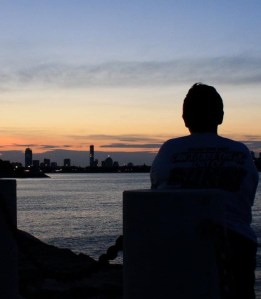 Things seem really dark this year. I realized that this week as I have been thinking about “Good’” Friday” and “Holy Saturday”. Don’t even get me started on my frustration with it being called “Good” Friday. In Christian tradition, the Friday and Saturday between Maundy Thursday and Easter Sunday are days of darkness and grief as we mourn the death of Jesus. I admirably respect the traditions that acknowledge the death as much as the resurrection. In order for there to be a resurrection, there had to be a death. When I took Old Testament during seminary, I had to write a paper on what Holy Saturday would be like for the followers of Jesus, in the Gospels. It was one of my best works. Sadly, I can’t find it. But I wrote about the darkness of the death and how the people navigated between the darkness and the hope. I imagined there was an internal struggle, wondering if Jesus would actually come back. The people walked around in mourning, reviewing the images of the crucifixion that were forever etched in their hearts. While reviewing the images, Jesus’s voice could be overheard, with his promise, a promise he made himself; that hey would return. And just like any other individual in mourning, they wondered if he actually would.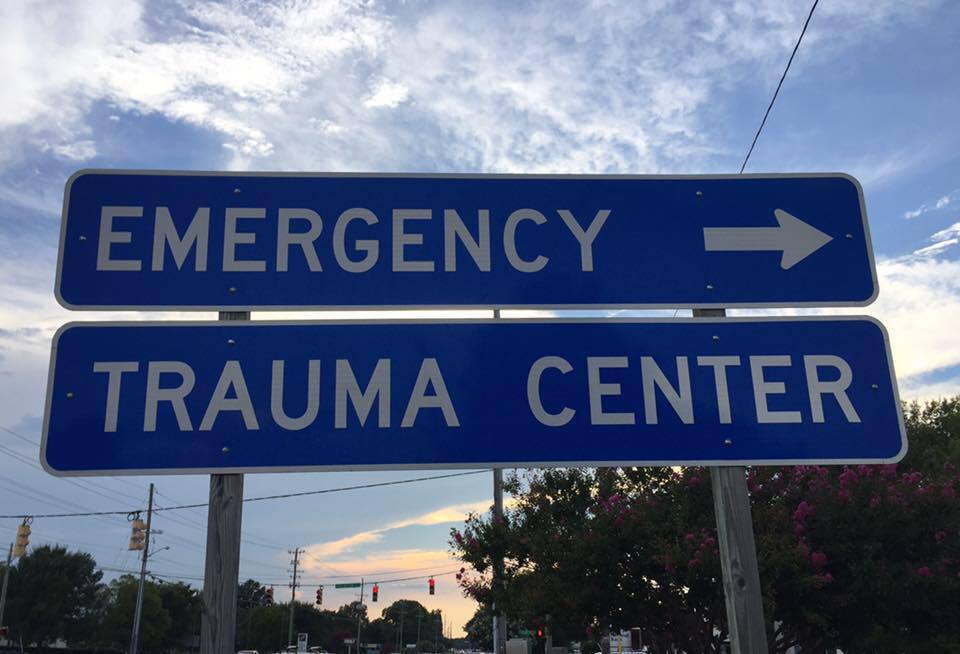
 opportunity to educate those who are curious. I like the surprise reactions that come once they learn that to be a board certified chaplain (BCC), I needed to have 10+ years of post undergrad education, graduate studies in psychotherapy and behavior systems, a year long residency, 2000 plus hours of clinical practice, an insane amount of paperwork and reflection, plus an interview with board certified chaplains. AND, in order to KEEP that certification, I must obtain 50 continuing education units, EVERY YEAR!. YES, EVERY YEAR. Do you know, that is the SAME amount as an RN? an MD? I wonder if they have to pay for their CEUs out of their own pockets.
 When I stood outside a patient’s room, to support her family. They stared into the room, lost in their anger and grief. They not only grieved the death of their mother but also their loss of not being able to touch her, hold her hand, or kiss her goodbye.
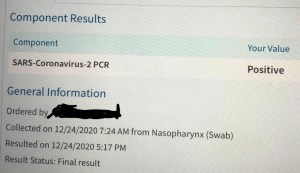 When I received my positive test result on Christmas Eve after being symptomatic. I was quarantined at home, alone, for ten days and stayed home to recover for another seven. I had a mild case and am still dealing with remnants of that impact. Given what I witnessed in the deaths and grief of many, I was blessed with a mild case of this reality.

 This Chaplain's Journey